Comparison
Panther vs T-34/85: quality against quantity
The Panther and the T-34/85 are often presented as the best medium tanks of their countries. They met many times on the Eastern Front in 1944 and 1945, yet they were built on almost opposite principles. Comparing them says a lot about how Germany and the Soviet Union fought the war.
Updated November 19, 2026 · 3 min read
Where they came from
The two tanks are linked. The Panther was Germany's response to meeting the original T-34 in 1941: its sloped armour and wide tracks were directly inspired by the Soviet design. When Panthers and Tigers appeared in numbers in 1943, the Soviets in turn needed a more powerful gun for their main tank. The answer was the T-34/85: the proven T-34 hull with a new, larger three-man turret and an 85 mm gun. It entered service in early 1944.
Key facts side by side
| Panther (Ausf. A/G) | T-34/85 | |
|---|---|---|
| Main gun | 75 mm KwK 42 L/70 | 85 mm (ZiS-S-53 in most vehicles) |
| Weight | about 45 tonnes | about 32 tonnes |
| Front hull armour | 80 mm, sloped at about 55° | 45 mm, sloped at about 60° |
| Engine | Maybach V12 petrol, about 700 hp | V-2 V12 diesel, about 500 hp |
| Crew | 5 | 5 |
| Production | about 6,000 | tens of thousands, continuing after the war |
Firepower
The Panther's 75 mm gun had a very long barrel and fired its shells at high velocity, which gave excellent armour penetration and accuracy at long range. Its sights were also very good. The T-34/85's 85 mm gun fired a heavier shell and had a better high-explosive round for use against infantry and anti-tank guns, but at long range it could not match the Panther's penetration against thick frontal armour.
Protection
From the front, the Panther was much better protected: its thick, sloped glacis plate resisted most Allied guns at normal combat ranges. Its sides were much thinner, though, and vulnerable to flanking fire. The T-34/85 had thinner armour everywhere, so it relied more on numbers, mobility and tactics than on surviving hits.
Crew and ergonomics
One of the most important changes in the T-34/85 was its three-man turret. In earlier T-34s the commander also had to aim and fire the gun, which made it hard to watch the battlefield. With a dedicated gunner, the commander of a T-34/85 could concentrate on finding targets and leading the tank. The Panther had a three-man turret from the start, with good vision devices and a roomy interior.
Reliability and production
This is where the T-34/85 had the clear advantage. It was simpler to build, easier to repair in the field, and its diesel engine and straightforward running gear tolerated hard use. Soviet factories turned out T-34s in enormous numbers. The Panther was complex and expensive; early vehicles suffered from engine fires and failing final drives, and although later versions were better, Germany could never produce enough to replace losses.
The TK Two sets compared
| [TK8002 Panther](set:tk-8002) | [TK8011 T-34/85](set:tk-8011) | |
|---|---|---|
| Pieces | 1,675 | 1,082 |
| Length | 32.3 cm | 28.5 cm |
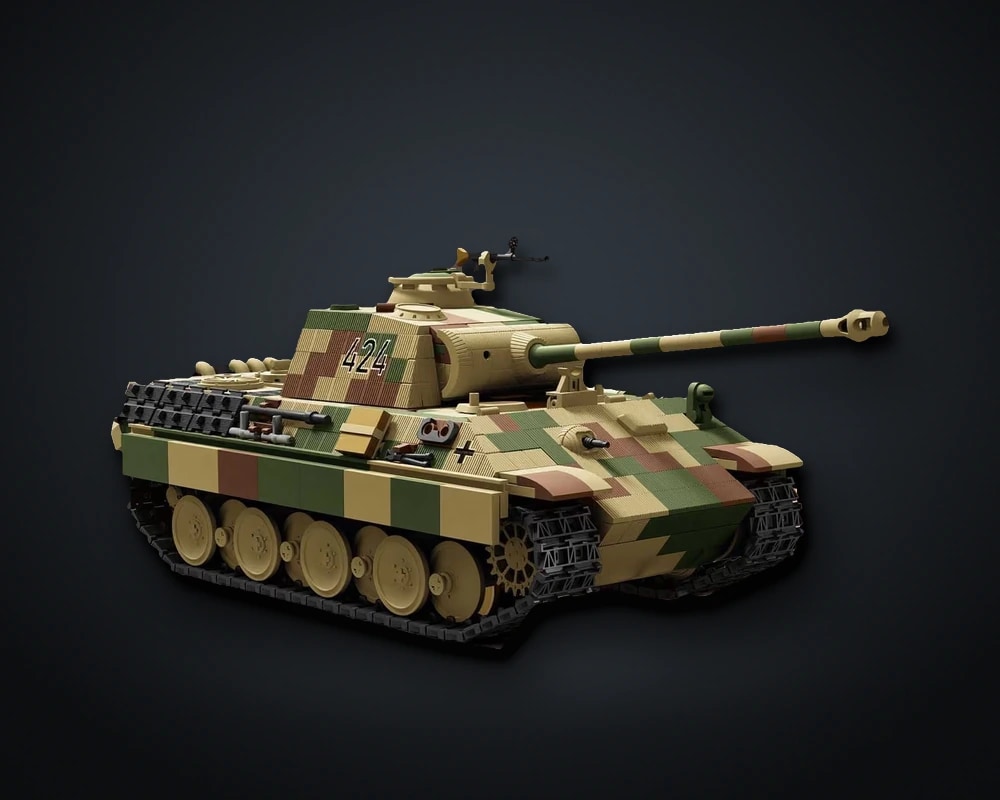
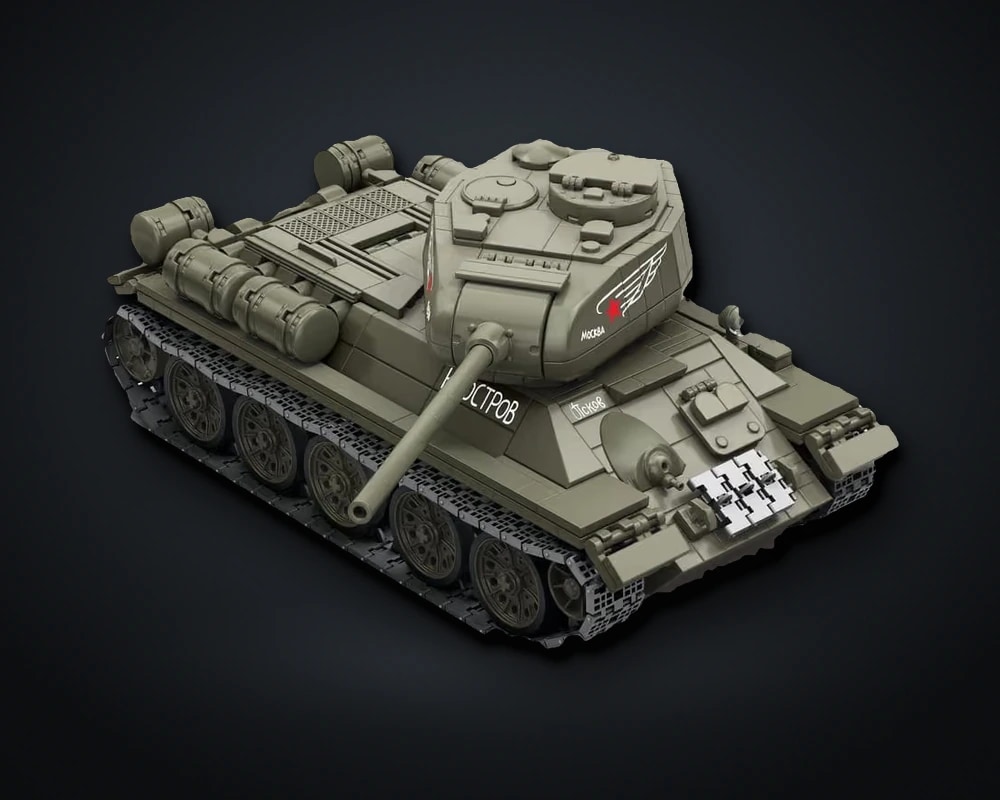
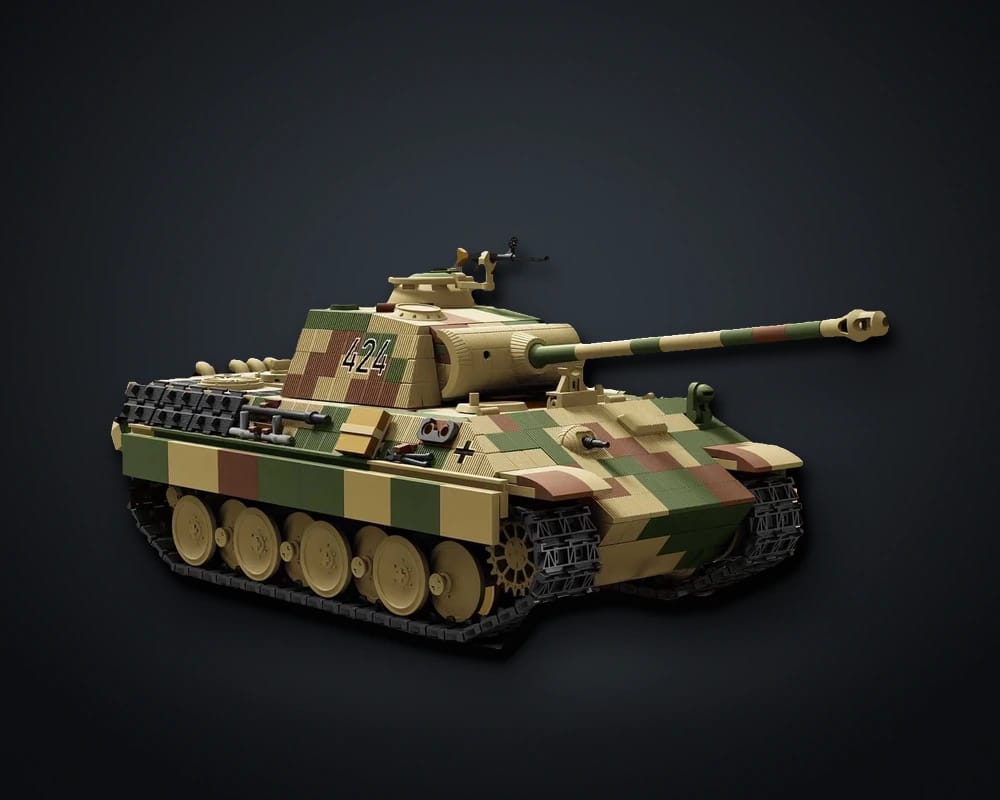
| Finish | Three-tone camouflage, turret number 424 | Soviet green with historically inspired markings |
| Interior | Driver's seat, turret basket, ammunition compartment, Panther engine | Driver's compartment, ammunition storage, engine |
| Functions | Elevating gun, opening cupola and driver's hatch, removable engine deck | Rotating turret, adjustable gun, opening commander's, driver's and rear hatches |
The size difference between the models mirrors the real tanks: the Panther is visibly longer and bulkier, while the T-34/85 is compact with a large turret set far forward. The Panther is the longer build, with more layers to take apart; the T-34/85 is a good mid-size project and one of the best first large sets in the range.
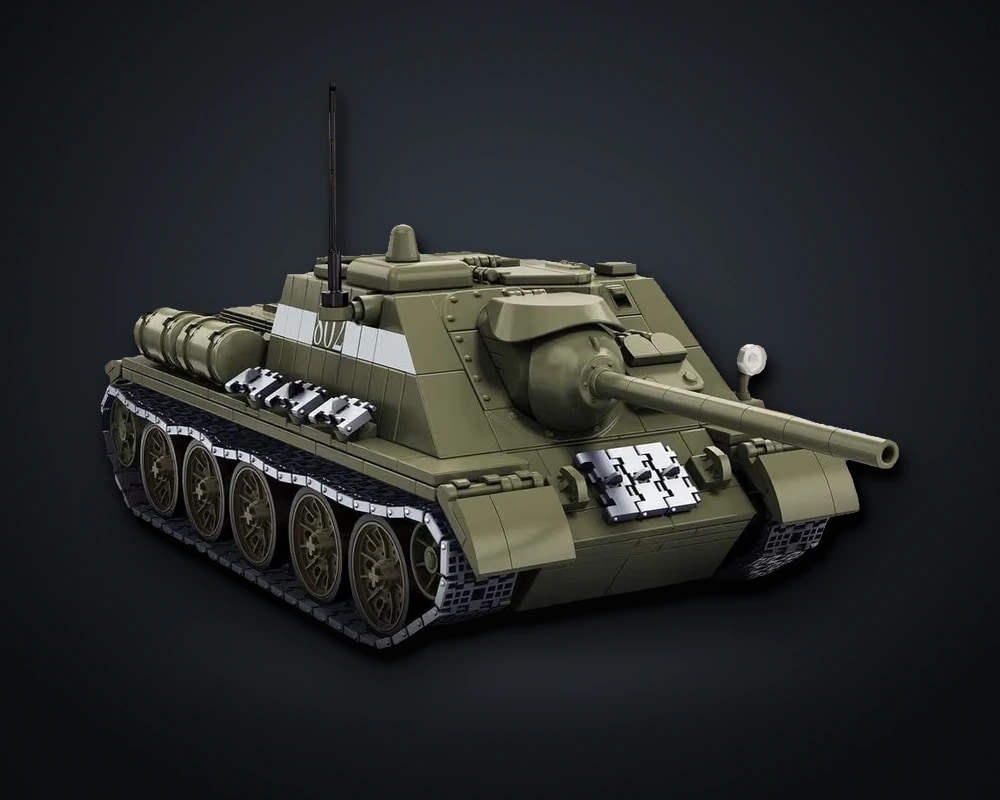
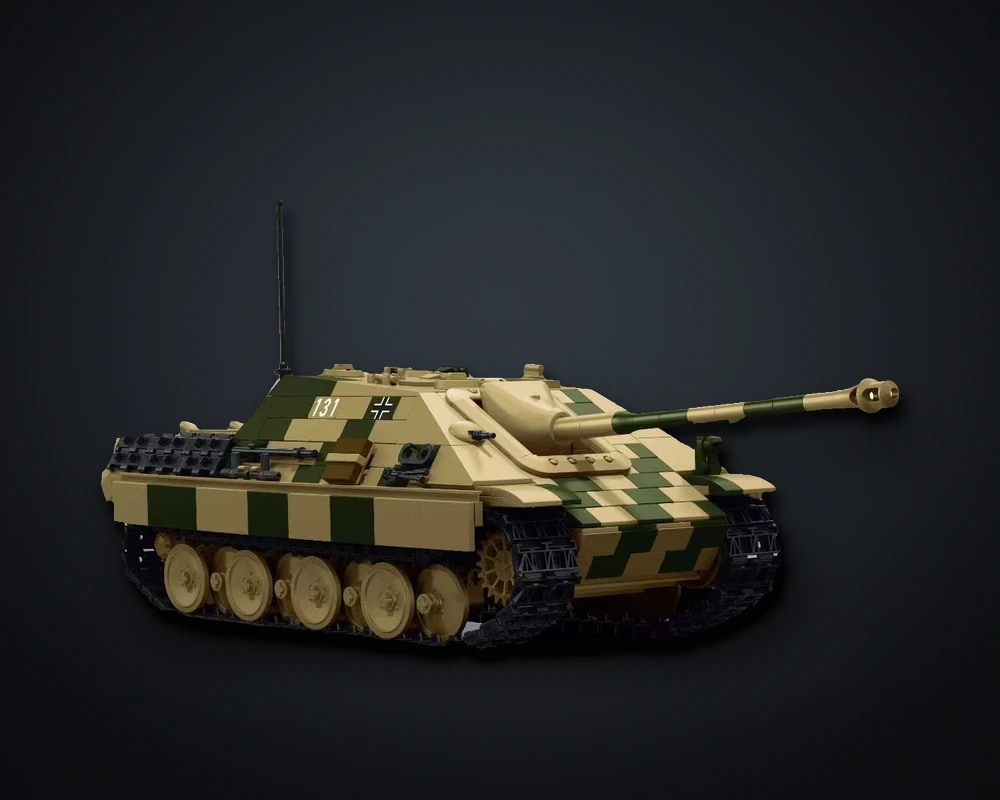
Displayed together, the pair makes a natural Eastern Front scene. If you want to extend it, the SU-85 shows the 85 mm gun in its earlier hull-mounted form, and the Jagdpanther shows the Panther chassis as a tank destroyer.